
Blog
How to Dry a Wet Mattress Fast: 4-Step Guide
A wet mattress needs immediate attention to prevent permanent damage. To dry a wet mattress quickly: blot excess liquid with towels, increase air circulation using fans and a dehumidifier, sprinkle baking soda to absorb remaining moisture and odors, then air dry completely in sunlight if possible. The process takes 24-48 hours depending on saturation level and drying conditions.
Time is critical—mold and mildew begin growing within 24-48 hours on damp mattresses. Once mold establishes, it creates health hazards and often requires mattress replacement. Whether your mattress got wet from spills, leaks, flooding, or cleaning accidents, this guide shows you how to dry a wet mattress effectively and save your investment.
How to Dry a Wet Mattress: Emergency Drying Guide
The 24-48 hour rule: Mold spores begin growing within this timeframe in damp environments, creating serious problems:
Health risks:
- Respiratory issues and allergic reactions
- Asthma triggers
- Persistent musty odors
Mattress damage:
- Material breakdown (foam deterioration, spring rust)
- Permanent stains and discoloration
- Structural damage requiring replacement
- Warranty voiding (most exclude water damage)
Cost consideration: Acting immediately with ~$20 in supplies can save your $800-2,000 mattress investment.
Assess the Damage First
Check saturation level:
Light dampness (surface only): Small spills, surface moisture—12-24 hours drying time
Moderate wetness: Medium spills penetrating partway—24-48 hours drying time
Severe saturation: Large spills, flooding, moisture throughout—48-72 hours (may not be salvageable)
When to replace immediately instead of drying:
- Floodwater or sewage contamination
- Visible mold already present (black, green, or pink spots)
- Mattress wet for 48+ hours before discovery
- Strong musty smell already developed
What You’ll Need
Essential supplies:
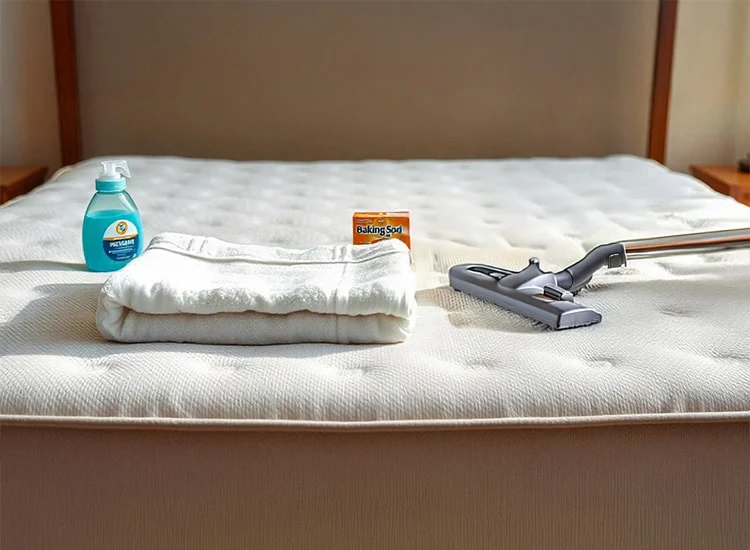
- Clean, dry towels (10-20 for large spills)
- Box fans (2-3 ideal) or standing fans
- Dehumidifier (for indoor drying)
- Baking soda (2-4 cups)
- Vacuum with upholstery attachment
Optional but helpful:
- Wet/dry vacuum (extracts more moisture)
- Wooden blocks or chairs (to elevate mattress)
Never use:
- Hair dryer on hot setting (damages materials)
- Space heaters (fire hazard, melts foam)
- Steam cleaner (adds more moisture)
How to Dry a Wet Mattress: 4 Steps
Step 1: Remove Excess Moisture Immediately
Speed is everything—the faster you remove standing water, the easier drying becomes.
Towel blotting method:
- Strip all bedding immediately
- Lay clean, dry towels flat over wet area
- Press down firmly with hands or stand on towels
- Don’t rub or scrub—this pushes water deeper
- Replace with fresh towels when saturated
- Repeat until towels come away barely damp (5-10 changes typical)
Wet/dry vacuum method (more effective):
- Use shop vac with upholstery attachment
- Work slowly in overlapping passes across wet area
- Continue until minimal moisture extracted
- Follow with towel blotting for remaining dampness
Goal: Extract 70-80% of moisture in this step. The more removed now, the faster complete drying.
Pro tip: If mattress is dripping wet, tilt on its side to let gravity drain water before blotting.
Step 2: Maximize Air Circulation
Air movement is critical for evaporation. Stagnant air creates the perfect mold environment.
Outdoor drying (most effective):
- Check weather—needs sunny, dry day with low humidity
- Move mattress outside to elevated surface (sawhorses, clean pallets)
- Position in direct sunlight—UV rays kill bacteria
- Rotate every 2-3 hours to expose all sides
- Bring inside before evening dew or rain
Indoor drying (when outdoor isn’t possible):
Fan setup:
- Move to room with hard floors (not carpet)
- Elevate mattress off floor using blocks or bed frame on its side
- Position 2-3 box fans 12-18 inches away pointing at wet area
- Set fans on high speed
- Ensure air circulates underneath mattress too
Dehumidifier use:
- Place in same room, close windows and doors
- Set to highest extraction setting
- Empty water reservoir every 4-6 hours
- Monitor humidity—aim for below 50%
Maximize airflow:
- Prop mattress vertically against wall (both sides air out)
- Angle slightly away from wall to prevent air trapping
- Run ceiling fan if available
- Open windows only if humidity is low outside
Drying time estimates:
- Outdoor, sunny day: 24-36 hours
- Indoor with fans only: 36-48 hours
- Indoor with fans + dehumidifier: 24-48 hours
Step 3: Apply Baking Soda for Moisture and Odor
After initial drying (mattress damp but not soaking), baking soda absorbs final moisture and prevents odors.
When to apply: Surface should feel damp to touch, not wet.
Application:
- Sprinkle generous layer over entire wet area (2-4 cups for large spills)
- Spread evenly—avoid thick piles
- Gently pat into fabric surface
- Let sit minimum 2-4 hours (12-24 hours for odor concerns)
How baking soda works:
- Absorbs remaining deep moisture
- Neutralizes odors before they set
- Creates alkaline environment discouraging bacteria
- Leaves fresh, clean scent
After waiting:
- Vacuum thoroughly with upholstery attachment
- Remove all powder completely
- Check dryness by touch
Step 4: Ensure Complete Drying
Most critical step: Using mattress before 100% dry invites mold growth.
Dryness tests:
- Touch test: Entire surface feels completely dry, not cool or damp
- Press test: Press firmly—should not feel spongy or release moisture
- Smell test: Should smell fresh, not musty
- Visual check: No dark spots indicating moisture
Final drying:
Sunlight method (most effective):
- Direct sunlight 4-8 hours
- Stand vertically supported against fence or wall
- Rotate to expose all sides
- Sunlight sanitizes while completing drying
Indoor completion:
- Continue fans additional 12-24 hours after surface feels dry
- Interior foam layers take longer than outer fabric
- Keep well-ventilated with no bedding
Important: Memory foam and thick mattresses retain moisture in their core long after surfaces feel dry. Add 12 extra hours for foam mattresses.
Signs fully dry:
- Feels light (not heavy from water weight)
- Normal firmness restored
- No cool spots when pressed
- Fresh smell throughout
When unsure: Wait another 24 hours. Better safe than risk mold from premature use.
Special Mattress Type Considerations
Memory Foam
Challenges: Highly absorbent, slow to dry, dense foam traps moisture.
Modified approach:
- Extract maximum water with wet/dry vacuum
- Requires fans + dehumidifier (outdoor alone insufficient)
- Needs 48-72 hours minimum drying time
- Stand vertically to let gravity help drain
Severe water damage: Thoroughly soaked memory foam often cannot fully dry and may need replacement.
Innerspring
Concerns: Metal springs can rust if moisture remains.
Tips:
- Easier to dry than foam (less absorbent)
- Stand on end to drain water through bottom
- Outdoor sunlight prevents rust development
- Still requires 24-48 hours complete drying
Hybrid
Combined foam and springs: Follow memory foam guidelines (minimal heat, longer drying time) due to foam layers.
What Not to Do
Avoid these common mistakes that cause permanent damage:
- High heat sources: Hair dryer on hot, space heaters, irons—all damage mattress materials and foam
- Using mattress before completely dry: Guarantees mold growth and ruins drying efforts
- Steam cleaning: Adds more moisture, worsening the problem
- Pressing too hard during blotting: Pushes water deeper into layers
- Leaving in humid environment: Prevents evaporation and encourages mold
When to Replace Instead of Dry
Sometimes drying isn’t possible or worth the effort:
Replace immediately if:
- Contaminated with sewage or floodwater
- Visible mold already growing
- Was wet for 48+ hours unnoticed
- Strong musty odor present
- Memory foam thoroughly saturated throughout
Consider replacement if:
- Mattress over 7-10 years old (already nearing end of lifespan)
- Significant structural damage visible
- Persistent odors after complete drying
- Allergic reactions develop after incident
Learn more about when to replace your mattress and signs it’s time for new one.
Preventing Future Water Damage
Protection strategies:
Use waterproof mattress protector: First line of defense against spills, accidents, and leaks. Much easier to wash protector than dry entire mattress.
No food or drinks in bed: Eliminates most spill risks.
Fix leaks promptly: Address roof leaks, plumbing issues, or window leaks before they reach your bed.
Regular inspection: Check for moisture issues in bedroom (condensation, humidity problems).
Mattress protector benefits:
- Blocks liquid from reaching mattress
- Machine washable for easy cleaning
- Protects against dust mites and allergens
- Extends mattress lifespan
- Maintains warranty coverage
Frequently Asked Questions
How long does it take to dry a wet mattress?
Drying time depends on saturation level and method: light dampness takes 12-24 hours, moderate wetness needs 24-48 hours, and severe saturation requires 48-72 hours. Outdoor drying in direct sunlight is fastest, while indoor drying with fans and dehumidifier takes longer. Memory foam mattresses require additional time beyond when the surface feels dry.
Can I sleep on a damp mattress?
Never sleep on a damp mattress. Even if the surface feels mostly dry, moisture trapped in interior layers will develop mold and mildew within 24-48 hours. This creates health hazards and permanently damages your mattress. Wait until the mattress passes all dryness tests—touch, press, smell, and visual checks.
Will a fan dry a wet mattress?
Yes, fans significantly speed drying by increasing air circulation and evaporation. Use 2-3 box fans positioned around the mattress on high speed. Combine with a dehumidifier for indoor drying to remove moisture from the air. Fans alone take 36-48 hours, but fans plus dehumidifier reduce time to 24-48 hours.
Can I use a hair dryer to dry my mattress?
Only on the cool or low heat setting for small, specific damp spots. Never use high heat—it damages mattress materials, melts foam, and can cause fire hazards. High heat also sets stains permanently. For overall drying, fans and natural air circulation are safer and more effective than hair dryers.
How do I know if my mattress has mold?
Signs of mold include visible dark spots (black, green, or pink), persistent musty odor even after drying, and increased allergy symptoms like sneezing or respiratory irritation. If you discover mold, the mattress typically cannot be salvaged and requires replacement for health safety.
The Bottom Line
Drying a wet mattress requires immediate action within 24-48 hours to prevent mold growth. The key steps are: blot excess moisture with towels or wet/dry vacuum, maximize air circulation with fans and dehumidifier, apply baking soda to absorb remaining moisture, and ensure complete drying before use.
Essential reminders:
- Act within 24 hours to prevent mold
- Remove 70-80% of moisture with towels first
- Never use high heat (damages mattress)
- Don’t use mattress until 100% dry
- Outdoor sunlight provides fastest, most effective drying
Protect your investment with a waterproof mattress protector to prevent future water damage. A $30-50 protector is much easier to wash than drying an entire mattress or replacing a ruined one.
About Palladecor: We provide expert guidance on home care and mattress maintenance, helping you protect your investments and maintain healthy living spaces.